Wednesday, April 9, 2014

Hippogriff


Today is the eight day of the A to Z April Challenge. This is a blog hop where participants post each day, except Sundays. We have over 1600 participants, so I hope you meet some new friends. To visit the main web page and visit other bloggers in this challenge click HERE.

I chose Fantasy for my theme and today is Hippogriff.


Hippogriff (aka: Hippogriffin) 

The hippogriff was the offspring of a gryphon - a half eagle/half lion - and a mare, and was considered by medieval writers to be a natural, nonmagical beast. It had the body of a horse and the forelegs, claws, wings and beak of a griffin, which were basically identical to those of an eagle. The hippogriff is often associated with the sun, the gryphons and horses of Apollo's chariot, and the Pegasus. The hippogriff's story is told in Orlando Furioso by Ariosto, most episodes of which are derived from Greek and other legends.

The hippogriff was originally tamed by a magician named Atlantes who lived in a castle in the Pyrenees where Rogero, the magician's foster son, was kept prisoner. Eventually Rogero escaped and took the hippogriff as his mount. In one adventure, it was ridden by Rogero as he tried to save a damsel from sacrifice to a sea beast, an episode that greatly resembled one of Perseus's adventures.

The hippogriff eventually passed into the hands of one of Charlemagne's knights, who then learned from Saint John how to defeat the pagan Africans. In the end, the hippogriff was set free into the mountains and never seen again. Until it was revived in Harry Potter and the Prisoner of Azkaban by J. K. Rowling. The hippogriff, named Buckbeak, was rescued from execution and flew away with Harry's uncle, never to be reappear again in the story.

J. K. Rowling's use a this mythical creature is an excellent example of how writers incorporate beasts in their stories.

Tuesday, April 8, 2014

Giants, Gnomes and Goblins


Today is day seven for the A to Z April Challenge. This blog hop has over 1600 participants and lasts throughout the month of April, with posts daily except Sundays. To visit other participants, you can go to the main website by clicking HERE.

I chose Fantasy for my theme and today, for the letter G, is Giants, Gnomes and Goblins.

Giants:

Giants have appeared in various forms and mythologies throughout the world. In Greek mythology, the Titans were the children of Gaea, Mother Earth, and Uranus, the Heavenly Sky. They were of gigantic stature and each Titan governed a certain realm, such as Oceanus over the ocean. Gaea also gave birth to other giants that had one hundred arms and fifty heads.
Norse mythology has even more stories about giants. The Rock and Frost Giants lived in Jotunheim and often battled the Gods. The thunder god Thor was the chief enemy of the giants.

Gnomes:

Gnomes were considered a minor race and appeared with less frequency in literature. They are similar to dwarves, though usually depicted as having more human proportions. They generally live underground.

Goblins:

Goblins appear in many folk and fairy tales as mischievous creatures, bewitching and tormenting men. They often wear caps and are depicted as misshapen and bowed little people. They are associated with the earth, live among tree roots and cracks in rocks, and are meddlesome, but not usually dangerous.

Giants, Gnomes and Goblins are used in fantasy writing by many authors. Tolkien used them in his books, such as The Hobbit and Lord of the Rings. Have you used them in any of your stories? Tell us...


Monday, April 7, 2014

Fantasy


This is day six in the A to Z April Challenge. It's a blog hop where participants post every day, except Sunday, following the alphabet. If you want to visit the home page click HERE.

I chose Fantasy for my A to Z Challenge theme. Today I'm writing about Fantasy.

Lester del Rey was a longtime writer, critic and editor in the fantasy/science fiction field. He used to say that it was harder to write good fantasy than any other form of fiction. Why? Because a writer of fantasy is free to invent anything, unfettered by the laws and dictates of this world and limited only by the depth of imagination and willingness to dream. The temptation to free-fall through a story chock full of incredible images and wondrous beings can be irresistible - but, when not resisted, almost invariably disastrous.

In creating a world populated by monsters and other strange life forms, reliant on uses of magic, and shimmering with images of childhood tales, legends and myths, a writer runs the risk of losing touch with reality entirely. Given the parameters of the world and characters that the writer has created, something of that world and those characters must speak to what we, as readers, know to be true about the human condition. If nothing corresponds to what we know about our own lives, then everything becomes unbelievable. Even the most ridiculous farce must resonate in some identifiable way with truths we have discovered about ourselves. Even the darkest sword and sorcery epic must speak to us of our own harsh experience.

Achieving this end as a fantasy writer demands mastery of a certain skill, one not uncommon with that required of a ship's captain charting a course at sea. When putting together a fantasy tale, a writer must navigate a treacherous passage that bears neither too hard to starboard nor too far to port in order to avoid arriving at an unforseen destination or, worse, ending up on the rocks. Fantasy writing must be grounded in both truth and life experience if it is to work. It can be as inventive and creative as the writer can make it, a whirlwind of images and plot twists, but it cannot be built on a foundation of air. The world must offer us a frame of reference we can recognize. The characters must behave in ways that we believe reasonable and expected. The magic must work in a consistent and balanced manner. The book must leave us with a feeling of comprehension and satisfaction at having spent time turning its pages to discover its end.

Do you have a favorite fantasy that you like to expound on?

(Excerpt from Introduction by Terry Brooks in "The Writer's Complete Fantasy Reference")

Saturday, April 5, 2014

Essences, Plants and Herbs


Today is day five in the A to Z April Challenge and the letter E is up for us to expound upon. This challenge is a blog hop for the entire month of April and has over a 1000 participants. To go to the main webpage, click HERE.


Essences, Plants and Herbs

In fantasy stories, many mages and sorcerers use essences, plants and herbs for their spells and potions. Here is a short list of plants and their uses.

Acacia: sacred to Diana; used to commune with spirits.
Angelica: sacred to Sophia; restores harmony.
Cinnamon: attracts lovers, health and luck.
Irish Moss: place under your rug for the "luck of the Irish."
Laurel: good luck, worn by victors.
Mandrake: hold the root as you conjure to strengthen spells.
Myrtle: sacred to Artemis.
Patchouli: sacred to Pan.
Rose: sacred to Diana.
Rosemary: offers protection; worn by pagan warriors into battle.
Vervain: sacred to Venus; used to banish evil.
Violet: sacred to the Fairy Queen.
Witches' Broom: purifies water.

I used Patchouli in a sci/fi story, written far in the future. There are numerous uses for these items when you use your imagination. I hope this was informative. What essences, plants and herbs have you used?

Friday, April 4, 2014

D For Dragons


Today is the fourth day of the A to Z Challenge lasting the entire month of April, excluding Sundays. This challenge is a blog hop using the letters of the alphabet. To go to the main webpage to visit other participants, click HERE.

I chose Fantasy as my main reference for the month. Today is D for Dragons.

As we know, dragons appear in various mythologies and legends. The Greek monster Echidna was supposed to be half dragon. In Babylonian myth, Tiamat was the great she-dragon that battled the god Marduk. In Norse mythology, Fafnir kept guard over his hoard until killed by Sigurd. The hero Beowulf was eventually killed by a dragon. In English tales, St. George killed a dragon and rescued a young virgin.

The most familiar form of the western dragon is a great flying reptile. It has large batlike wings, a serpentine tail, sharp claws or talons and lots of teeth. These dragons usually breathe fire and some have a penchant for virgins. Often, like Fafnir, they are known to hoard gold and jewels. Dragons are hard to kill but almost always have one vulnerable spot for the hero to find.

In my Dragon Stone Trilogy, the dragon befriends a man and they bond as soul mates. This is something that happens in various other more modern stories about dragons. They have speech, where they can talk to their rider or in some cases, they use a king of telepathy.

Whether or not they are friendly to man, dragons have been a fascination to many throughout history. Do you like reading about dragons? What is your most memorable dragon?

Thursday, April 3, 2014

Castles


Today is the third day of the A to Z Challenge, where participants post each day in April except on Sundays. You can visit the web page of this blog hop HERE, to join over one thousand bloggers as they roll through the alphabet this month. I hope to see your name on the list!

My theme is Fantasy and today it's about Castles.
Castles

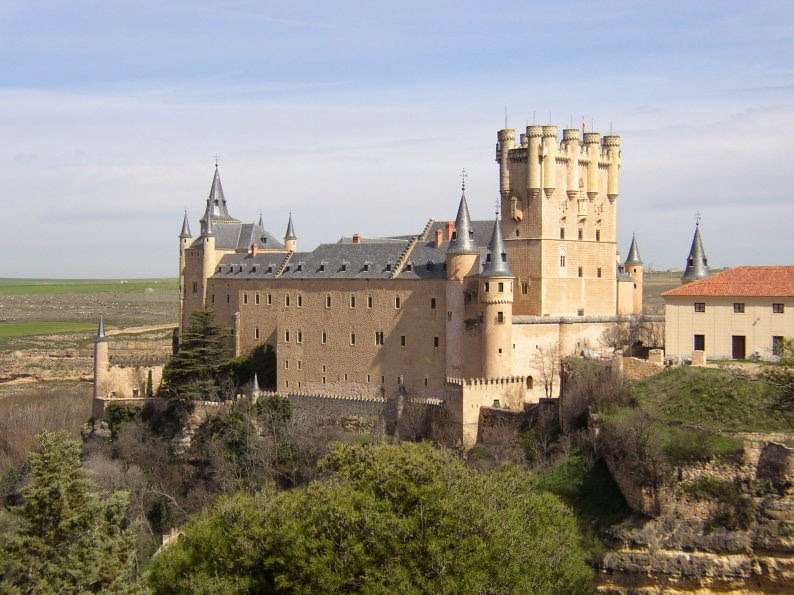
Castles were fortified dwellings deliberately built for the security of a local lord and his or her followers in areas subject to little or no central political control. The primary purpose of true castles is defense, and any other uses were incidental or auxiliary.

Symptomatic of anarchic, fragmented societies, castles were not built for their aesthetic value and were rarely constructed inside strong national states. Rather, they were built for protection against raiders, foreign invaders or aggressive neighbors. From modest fortifications that sheltered a dozen warriors and their dependents, castles evolved through the Middle Ages into complex, durable citadels that housed hundreds. Some of the most well situated, well-constructed and well-stocked castles never succumbed to their enemies, whether by assault or siege.

Castles were usually built or controlled by the ruler of an area and were used to defend its frontiers from invasion. Such castles would be given to leaders who had sworn fealty to the noble. The lord of the castle usually had military control over the area immediately around the castle and maybe within a few hour's travel from it. He lived in the castle with his family, his soldiers and their families, and a variety of craftsmen, servants and serfs. Frequently, the latter did not live in the castle but on its lands and near enough that they could quickly repair it in times of crisis.

Castles were the rocks upon which the tiny states of feudal lords existed, and a suitably built, stocked and manned castle could allow a lord to wield great power within his realm and possible political importance outside of it. Thus, the temperament of the lord was of great importance to the people. They could be ruled by harshness or by compassion.

 * * *

Would you want to live in a castle? If so, where would it be?

Wednesday, April 2, 2014

The Bard - An Early Muscian


This is the second day of the A to Z Challenge held throughout the month of April. Participants post every day except Sundays in this blog hop and meet with any number of over a thousand bloggers. To go to the main web page, click HERE and you'll find the list of bloggers. Have fun!


The Bard was a musician or minstrel in the middle ages, who usually sang only of heroic deeds They carried their instrument, usually a lute and/or a wooden flute, and like acrobats, traveled from place to place in search of donations to live on.

Many bards and minstrels recited the news of the day set to rhyming music. Since the news wasn't written down, they were popular in the courts of the rich, where they learned of what deeds were being sung about. A knight could possibly hear of his own deeds being sung, sometimes with embellishment to the deeds.

Many bards and minstrels were nobles who either dropped out or were forced out of their noble status.

In the Celtic and Druidic traditions an individual followed the Bardic Path. Devotees would travel from place to place reciting mystical poetry, song and mythology.

(A page from the tale of Beowulf. One of the few tales that was put down in writing)